Dishes with cardamom on restaurant and hotel menus
Cardamom is one of the spices guests recognise from the first spoonful. In rice, broths and milk desserts its aroma is what makes a dish taste properly cooked. The problem: cardamom is expensive, its strength varies from sack to sack, and it fades after grinding. That is why many restaurants and hotels use cardamom extract powder: a smaller amount and the same aroma in every pot.
Rice dishes
Cookery references describe cardamom as giving rice a rich aroma and a light sweetness, which is why it goes into so many rice dishes:
- Kabsa and mandi — cardamom is a core part of their aroma.
- Bukhari rice — rice cooked in stock and spices.
- Biryani and spiced rice — cardamom gives the familiar eastern taste.
- Banquet and buffet rice — big pots that must taste the same every time.
Add the extract to the stock or rice water while it boils, before the rice goes in, and stir well. The aroma reaches every grain and there are no pods to pick out. If you use our ready rice mix, taste before adding more cardamom.
Broths, meat stews and soups
Lamb and beef broths for fatteh and rice, meat and vegetable stews and clear soups all take cardamom to soften the smell of the meat. Whole pods release their aroma slowly and vary with boiling time; the extract goes into the boiling water and gives the same result every day.
Desserts cooked with milk
Rice pudding, muhallabia and sweet vermicelli with milk are buffet favourites. Add the extract while the milk is simmering and stir, rather than sprinkling it on top. Note: the extract is made for food that is cooked, not for coffee — cardamom oil does not dissolve in water and floats in a small cup.
How much extract?
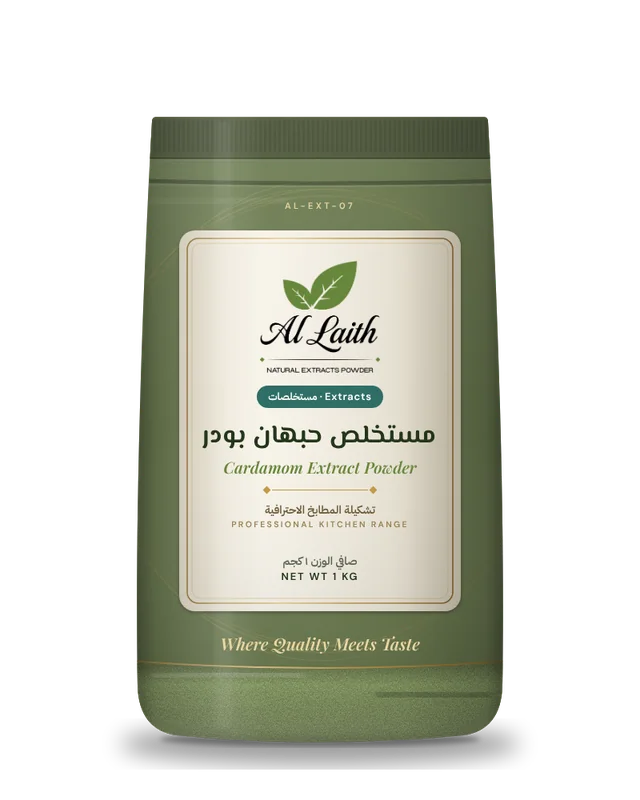
Use 40–50% less: 100 g of good natural cardamom = 50–60 g of Al Laith concentrated extract. Start with half your usual amount, taste, adjust, and write the figure on the recipe card so every shift gets the same taste.
- Packs: 1 kg and 5 kg packs and 15 and 25 kg bags, delivered to every governorate.
- Store sealed, dry, away from stove heat and sun; use a dry spoon.
- For clove aroma in the same rice and broths, see clove extract powder.
Send us your dishes and quantities on WhatsApp and we will send you a quote.
Frequently asked questions
Which restaurant dishes use cardamom?
Kabsa, mandi, Bukhari rice and biryani; meat broths, fatteh, stews and soups; and milk desserts such as rice pudding, muhallabia and sweet vermicelli.
When do I add cardamom extract to rice?
Into the stock or rice water while it boils, before the rice goes in, stirring well so it spreads through the pot.
How much extract replaces 100 g of cardamom?
50–60 g of Al Laith concentrated extract replaces 100 g of good natural cardamom — 40–50% less.
Can cardamom extract be used in coffee?
No. Cardamom oil does not dissolve in water and floats in the cup with a sharp taste; the extract is for cooked food such as rice, broths and milk desserts.
More articles you may find useful
- Cardamom Pods vs Ground Cardamom vs Extract for Restaurants
- Is Hail the Same as Cardamom? Cardamom Extract Guide
- What Is Clove Extract Powder? Restaurant Uses
- Spice Costs: Concentrated Extract vs Ground Spice
Cardamom extract powder — see the product page and request a quote on WhatsApp.