
Why restaurant basmati tastes different every time
Basmati has become the standard side in grill, chicken and oriental restaurants, served with kofta, shish and grilled chicken. The problem is that every chef adds spices and salt by hand: today the rice is right, tomorrow it is salty, the next shift it is bland. With large batches, one mistake ruins a whole pot, not one plate.
The answer is not a better chef but a fixed weight. When the basmati rice spices come ready and pre-measured, the taste stays the same whoever is at the pot.
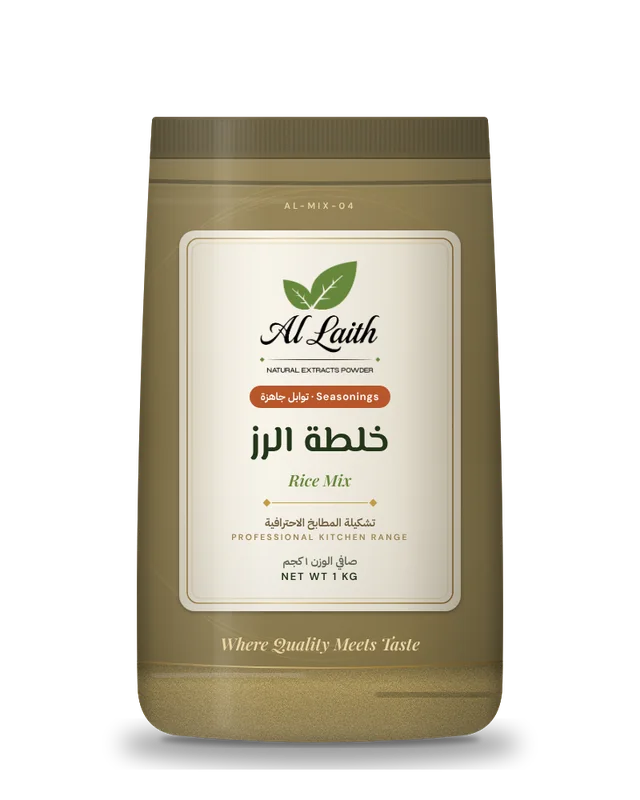
Ready basmati rice spices: Al Laith rice mix
Al Laith rice mix is made for restaurants: pre-salted, so no extra salt is needed, and measured so that 1 kg of mix seasons 10 kg of rice. It works with basmati, Egyptian white rice and rice with vermicelli, so one mix covers several items on the menu.
- Same taste in every pot, morning or night, in every branch.
- No salt mistakes: the mix is already salted.
- Clear costing: 1 kg of mix per 10 kg of rice.
Restaurant-style basmati with the mix
- Soak, then rinse: soaking basmati for about 20 minutes lets the grains absorb water slowly and lengthen as they cook; rinsing in cold water until it runs clear removes surface starch so the grains do not stick.
- Weigh rice and mix: 1 kg of mix for every 10 kg of rice, and the same ratio for smaller batches.
- Add the mix with the cooking water so it coats every grain evenly.
- Fat to suit your menu: oil, butter or ghee as you prefer.
- No extra salt.
- Let it rest: a few covered minutes after cooking spreads steam and moisture through the pot; then fluff gently to keep the grains separate.
Water: record it once
The right amount of water for basmati depends on the rice, the soaking, the pot and the burner, and sources disagree on it. Cook the first pot, and once it is right, write the water for every 10 kg of rice into your standard recipe. With a fixed weight of mix, taste and texture stay the same every day.
Mistakes that spoil basmati
- Adding salt on top of the pre-salted mix.
- Sprinkling the spices on cooked rice, which leaves parts of the pot bland.
- Stirring hard while the rice is hot, which breaks the grains.
- Every chef using a different amount: post the ratio in the kitchen.
Plain, smoked or buttered?
- Basmati with grills, chicken and catering: rice mix.
- Mandi and smoked rice under grilled chicken or meat: smoked rice mix, smoky taste without a smoker.
- Butter rice beside kofta and kebab: buttered rice mix, butter taste with water and a little oil.
All three use the same ratio, 1 kg per 10 kg of rice, and are pre-salted. Al Laith supplies them in 1 kg and 5 kg packs and 15 and 25 kg bags, delivered to every governorate in Egypt. Send us on WhatsApp how much rice you cook a day and the dishes you serve, and the Al Laith team will suggest the mix and send a quote.
Frequently asked questions
What basmati rice spices do restaurants use?
Many use a ready, pre-salted rice mix instead of weighing spices and salt by hand. Al Laith rice mix seasons 10 kg of rice per kilo and works with basmati, white rice and vermicelli rice.
How much basmati does 1 kg of rice mix season?
1 kg of mix seasons 10 kg of rice; keep the same ratio for smaller batches.
Do I add salt with the rice mix?
No, the mix is pre-salted.
How do I make fluffy restaurant-style basmati?
Soak the rice for about 20 minutes, rinse until the water runs clear, add the mix with the cooking water, rest the rice briefly after cooking and fluff gently. Record the water that works so every pot matches.
Can I use the same mix for mandi rice?
For mandi and smoked rice use the smoked rice mix, at the same 1 kg per 10 kg of rice.
More articles you may find useful
- What Is Curry Extract Powder? Uses in Restaurants
- Butter Rice for Grills: A Restaurant Guide
- How to Keep the Same Taste Across Every Branch
- Mandi Rice for Restaurants: Chicken and Lamb Mandi
Rice mix — see the product page and request a quote on WhatsApp.