
Mastic uses in cooking: why the aroma matters on a menu
Mastic is an aroma guests recognise at once: in boiled chicken stock, in the rice served with grills, and in muhallabia and rice pudding at the end of a meal. The problem is that Greek mastic is expensive, and its tears must be pounded with sugar or salt so they do not stick, which costs staff time every shift.
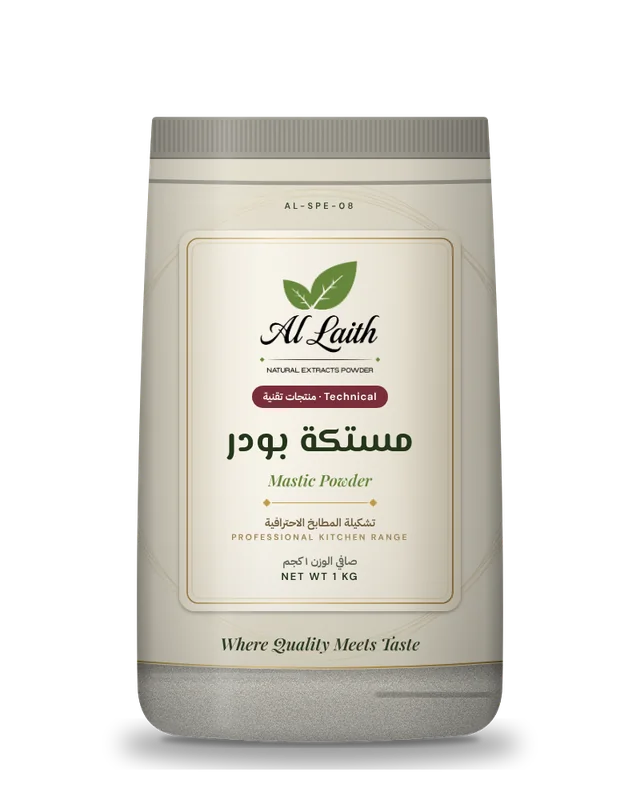
That is why many restaurants use a concentrated mastic powder: a fine, ready powder that goes straight into water, milk or a marinade, concentrated enough that you use 25% less than your usual weight of Greek mastic.
Where restaurants use mastic
- Boiled chicken and meat, and stocks: add it at the start of boiling with cardamom and bay leaves. It balances the raw-meat smell and gives the stock its signature aroma. A chicken bouillon powder keeps the chicken taste steady in large pots.
- Rice, stock rice and mandi: sprinkle it into the rice stock, or stir it into the butter or ghee before adding the rice.
- Shawarma marinade: a small amount behind the spices, mixed into a ready blend such as chicken shawarma seasoning with oil, yoghurt and lemon.
- Muhallabia, rice pudding and milk-based oriental sweets: dissolve it first in a little warm milk, then stir it into the rest.
- Mastic ice cream: added to the milk while the base is prepared, with no pounded grains left in the mix.
Fatta and baked trays
Fatta and baked trays made with meat or chicken stock take their mastic aroma from the stock itself. Get the mastic right at the start of boiling and the aroma reaches the toasted bread, the rice and the sauce without adding anything else, so every tray tastes like the last one, even for large orders.
Hotel kitchens and buffets
Hotels and caterers cook the same dishes in larger batches: buffet rice, chicken soup, trays of muhallabia. A fixed powder weight, written into the recipe once, gives every chef on every shift the same result and saves the time spent pounding mastic.
Mistakes that spoil the aroma
- Using the same weight as Greek mastic: the powder is concentrated, so start 25% lower.
- Adding it at the very end of boiling instead of at the start.
- Sprinkling it onto cold milk instead of dissolving it in warm milk first.
- Storing it near steam or heat: keep the pack closed in a dry place.
Ordering mastic powder for your restaurant
Al Laith supplies mastic powder in 1 kg and 5 kg packs and 15 and 25 kg bags. Send us your restaurant type and the dishes you use mastic in on WhatsApp, and the Al Laith team will send you a quote.
Frequently asked questions
What is mastic used for in cooking?
Boiled chicken and meat and their stock, rice and mandi, shawarma marinade, muhallabia, rice pudding, ice cream and milk-based oriental sweets.
When do I add mastic when boiling chicken?
At the start of boiling, with cardamom and bay leaves.
How much mastic powder replaces Greek mastic?
25% less than the weight of Greek mastic you used in the same recipe.
How do I dissolve mastic powder in muhallabia?
Dissolve it first in a little warm milk, then stir it into the rest of the mix.
More articles you may find useful
- Mandi Rice for Restaurants: Chicken and Lamb Mandi
- Chicken Orzo Soup, Couscous & Rice with Bouillon
- Off-Flavor Neutralizer for Hotel Kitchens and Catering
- What Is Chicken Taste Enhancer? A Restaurant Guide
Mastic powder — see the product page and request a quote on WhatsApp.