
What is egg powder?
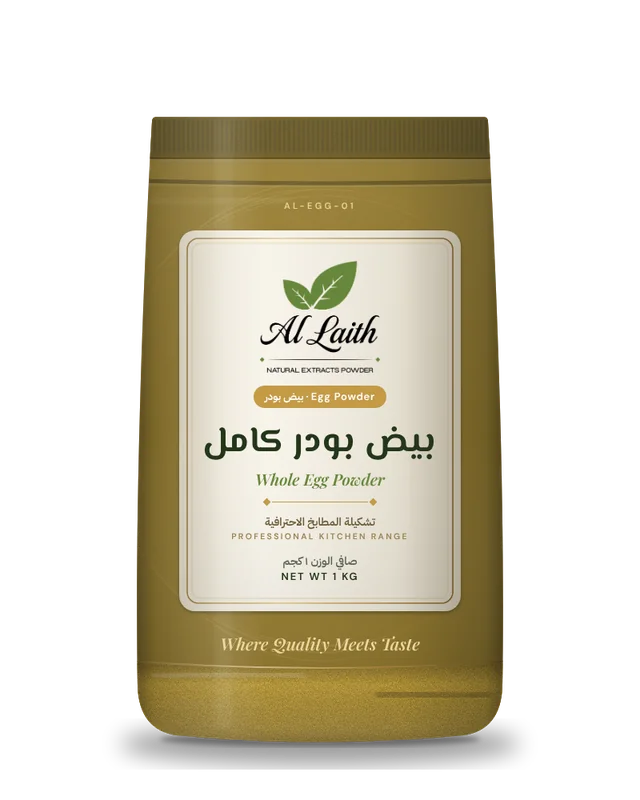
Egg powder is real egg that has been dried into a fine powder. It keeps at room temperature and is mixed back with water when you need it. Kitchens use three types: whole egg powder, egg yolk powder and egg white powder (dried albumen).
Why restaurants switch to dried egg
- No cracking, no shells and no losses from broken cartons.
- Simple dry storage — no refrigeration before mixing.
- Exact yield per kilo, so plate costing is easy.
- The same batter and dough texture on every shift.
Water ratios
| Type | Powder | Water | Yield |
|---|---|---|---|
| Whole egg powder | 1 kg | 3–3.5 kg | 4–4.5 kg beaten egg |
| Egg yolk powder | 1 kg | 3–3.5 L | 4–4.5 kg beaten yolk |
| Egg white powder | 1 kg | 7 L | 8 kg egg white |
Sprinkle the powder gradually into the water while whisking until fully dissolved. Mix only what the shift needs and handle the mixed egg like fresh liquid egg.
Which type for which dish?
Whole egg powder
Batters and breading for crispy chicken and escalope, pancakes and waffles in cafés, omelettes for hotel breakfasts and catering, and cakes in small bakeries. Al Laith supplies it in 1 kg packs and 15 and 25 kg bags; our team helps you plan the right quantity for your use.
Egg yolk powder
Rich in lecithin, a natural emulsifier that keeps mayonnaise, aioli and creamy sauces stable. Ideal for shawarma and burger restaurants that make their own house sauces, and for custards and pastry creams.
Egg white powder
High in protein with good whipping and gelling. Used for meringue, light coatings and binding meat and fish. One kilo makes 8 kg of liquid egg white. Available in 1 kg packs and 15 and 25 kg bags.
Storage tips
- Keep in a cool, dry place away from sunlight.
- Close the pack tightly and use a dry scoop.
- Rotate stock first-in, first-out.
Uses by type of restaurant
Crispy and broasted chicken shops rely on whole egg powder for an even dipping batter that holds the breading. Cafés and breakfast spots save cracking time at peak hours for pancakes, waffles, crêpes and omelettes. Hotels and catering companies value long storage and predictable costs when preparing thousands of meals a day. Small bakeries use whole egg for cakes, yolk for custards and fillings, and white for meringue and mousse.
Common mistakes
- Adding all the water at once — sprinkle the powder in gradually while whisking.
- Measuring by eye instead of by weight.
- Leaving mixed egg out of the fridge for hours.
- Leaving the pack open — moisture causes lumps.
All egg powders come in 1 kg packs and 15 kg or 25 kg bags, delivered across Egypt. Send us your menu on WhatsApp and we will suggest the type and quantity.
Frequently asked questions
How much liquid egg does 1 kg of whole egg powder make?
Mixed with 3–3.5 kg of water, 1 kg of whole egg powder makes about 4–4.5 kg of beaten egg.
Does egg powder need refrigeration?
Not as a powder — store it cool, dry and tightly closed. Once mixed with water, treat it like fresh liquid egg and use it the same day.
More articles you may find useful
- How to Reconstitute Egg Powder: Water Ratio Table
- Egg Yolk Powder for Mayonnaise and Sauces
- Egg White Powder (Albumen): Uses and Preparation
- Egg Powder vs Fresh Eggs: A Restaurant Comparison
Whole Egg Powder — see the product page and request a quote on WhatsApp.